
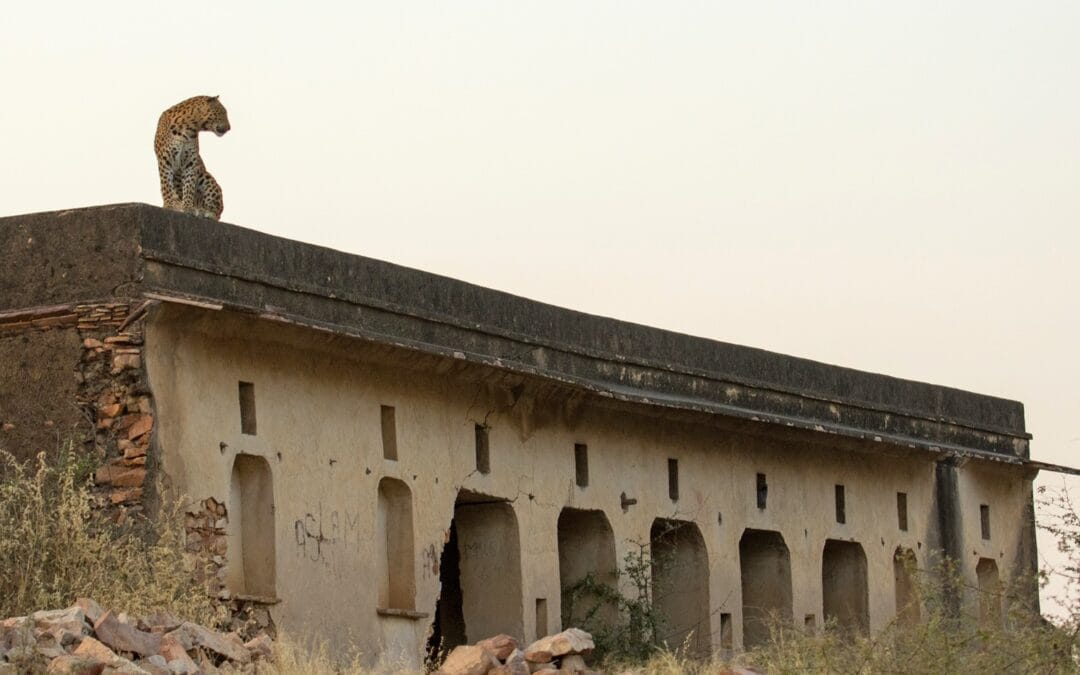
Everyone says the forest is shrinking, but I believe humans have unknowingly made ‘everything’ so easy for leopards that it has become a ‘dangerous trap’ for their own lives.
In recent times, leopards around Jaipur have repeatedly caused an atmosphere of fear and confusion. It seems as though the human-wildlife conflict has suddenly escalated. People quickly jump to explain: “There is less food in the forests,” “water is scarce,” “the forest area is shrinking,” or even blame forest officials for not doing their job correctly or lacking resources. Unfortunately, some forest department personnel even seem to support these views.
My perspective is entirely contrary to this common narrative.
This situation is not unique to Jaipur. Similar patterns have been observed across many parts of India over the last few years. The critical question is: What has truly changed to cause such a dramatic increase in conflict cases today?
Question 1: Has the leopard population increased? And what is the ideal number for a forest?
Answer: Yes, the leopard population has definitely grown. While I don’t have an exact “ideal” number, the current figure seems to be unnaturally high.
There are three main reasons for the surge in leopard numbers over the last one to two decades:
A — The Change in Our Attitude Towards Wildlife
Over the last two decades, tourism and education have significantly shifted public perception. Previously, a leopard was viewed purely as a threat; today, many people view them with curiosity and admiration.
Motivated by tourism and a greater environmental consciousness, the public and the government increasingly see wildlife protection as a primary duty. This is positive, but it is a major contributing factor to the population growth. Governments have focused more on wildlife conservation, and protection efforts have reduced poaching.
B — Abundant Water Availability in Jaipur’s Forests
This is the most critical factor. Over the past 15-20 years, water sources and other resources have been augmented in forests across the country. Previously, water scarcity naturally controlled the leopard population. Today, however, an abundance of water has been supplied to our dry deciduous forests, eliminating this natural control. Solar pumps and tube wells have been dug everywhere.
C — Humans in and around Jaipur have Unknowingly Created Excessive Food Sources:
Discarded food waste in and around the city.
Meat scraps and residues dumped by butcher shops.
Carcasses of dead domestic animals near the forest edge.
The growing population of dogs and pigs that feed on garbage, plus rodents that leopards can also prey on.
All this creates an “unlimited buffet” environment for leopards. The easier the food is to acquire, the more leopards the area can sustain.
Therefore, the current media discussion—that forest officials have allowed food, water, and security to weaken—appears to be a fallacy. The real cause, in my view, is the opposite.
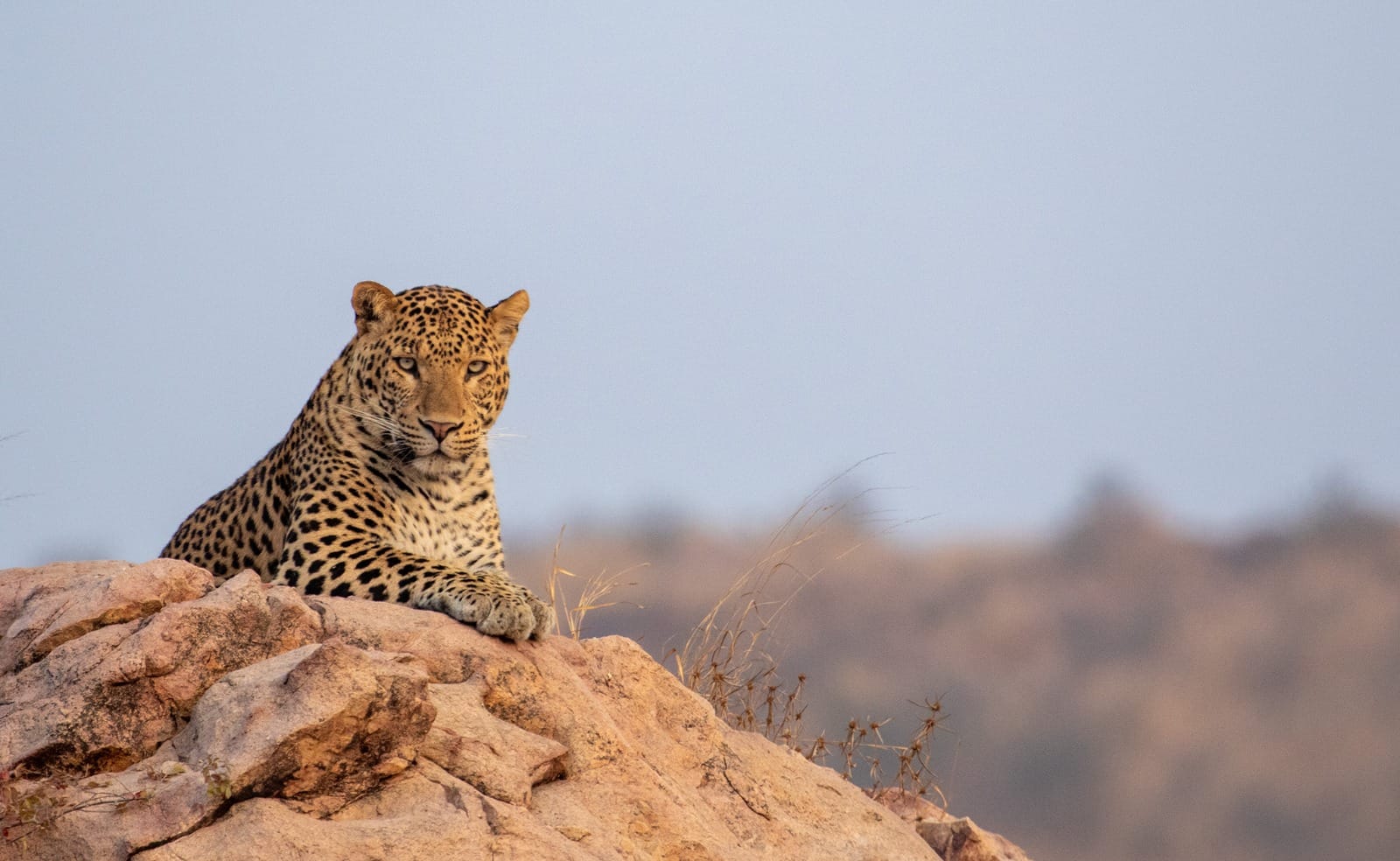
Around the city of Jaipur, humans have unintentionally created an abundance of food for leopards (Photo: Dr. Dharmendra Khandal).
Someone might proudly say: “Look, the area has 125–132 leopards—this is wonderful!”
But the real question is:
Question 2: Can Jaipur truly sustain such a large population naturally?
Answer: No.
Why?
Because the garbage spread around the city, the illegal dumping of meat waste, the improper disposal of dead animals, and the growing number of dogs, pigs, and rats—all create a false illusion of “easy food.”
The leopard thinks there is abundant food here, but it is not natural prey; it is unnatural food supported by human waste.
This very situation is known as an “Ecological Trap”— a theory introduced by J.A. Krebs in the 1970s.
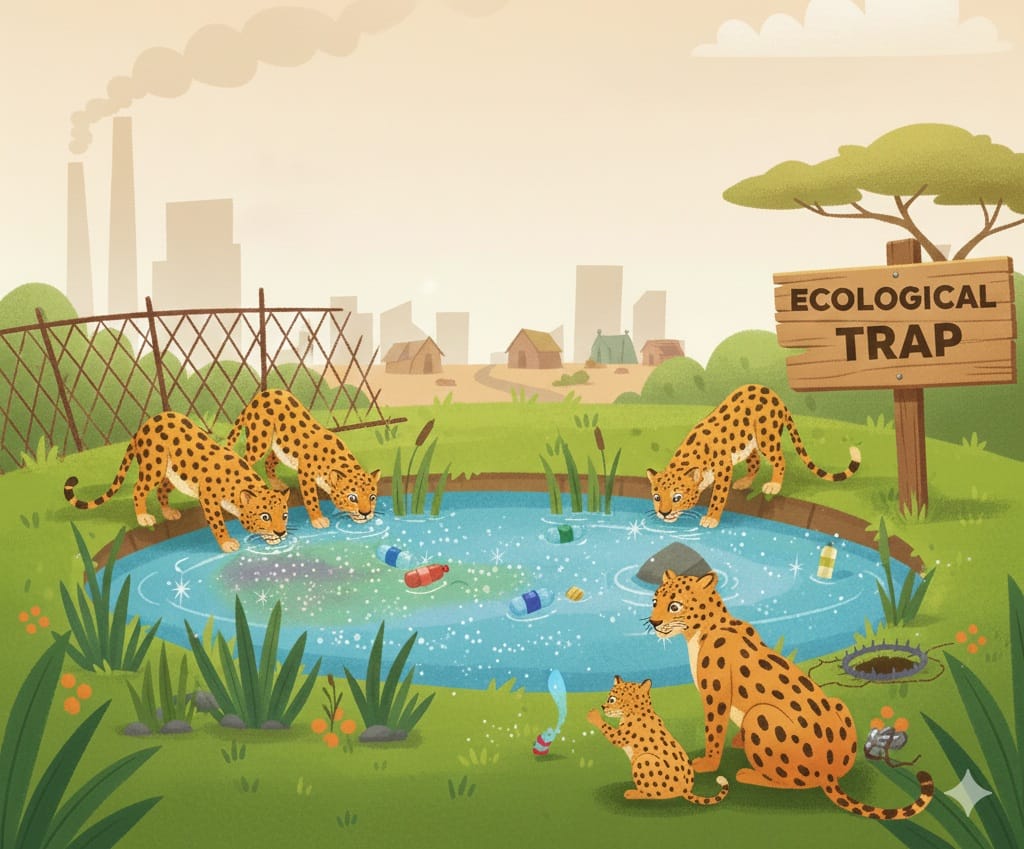
What is an Ecological Trap?
It is a habitat that appears attractive and safe to animals from the outside, but is actually insufficient for their long-term survival. This situation is often caused by human-made changes.
Question 3: If food, water, and safety are abundant, why does the leopard feel the need to move outwards?
Answer: To understand this, we must re-examine the true state of our forests with the correct perspective. Many of our forests have now become Ecological Traps.
A forest can tolerate an increasing population up to a certain point, but when the following conditions occur:
Dominant male leopards prevent younger males from establishing a territory.
The habitable area is limited.
Natural prey is insufficient and difficult to raise/sustain among so many leopards.
The availability of human-generated food becomes uncertain or risky.
…then young male and sub-adult leopards are forced to seek new areas. This is why they are increasingly sighted near cities, farms, industrial areas, and highways.
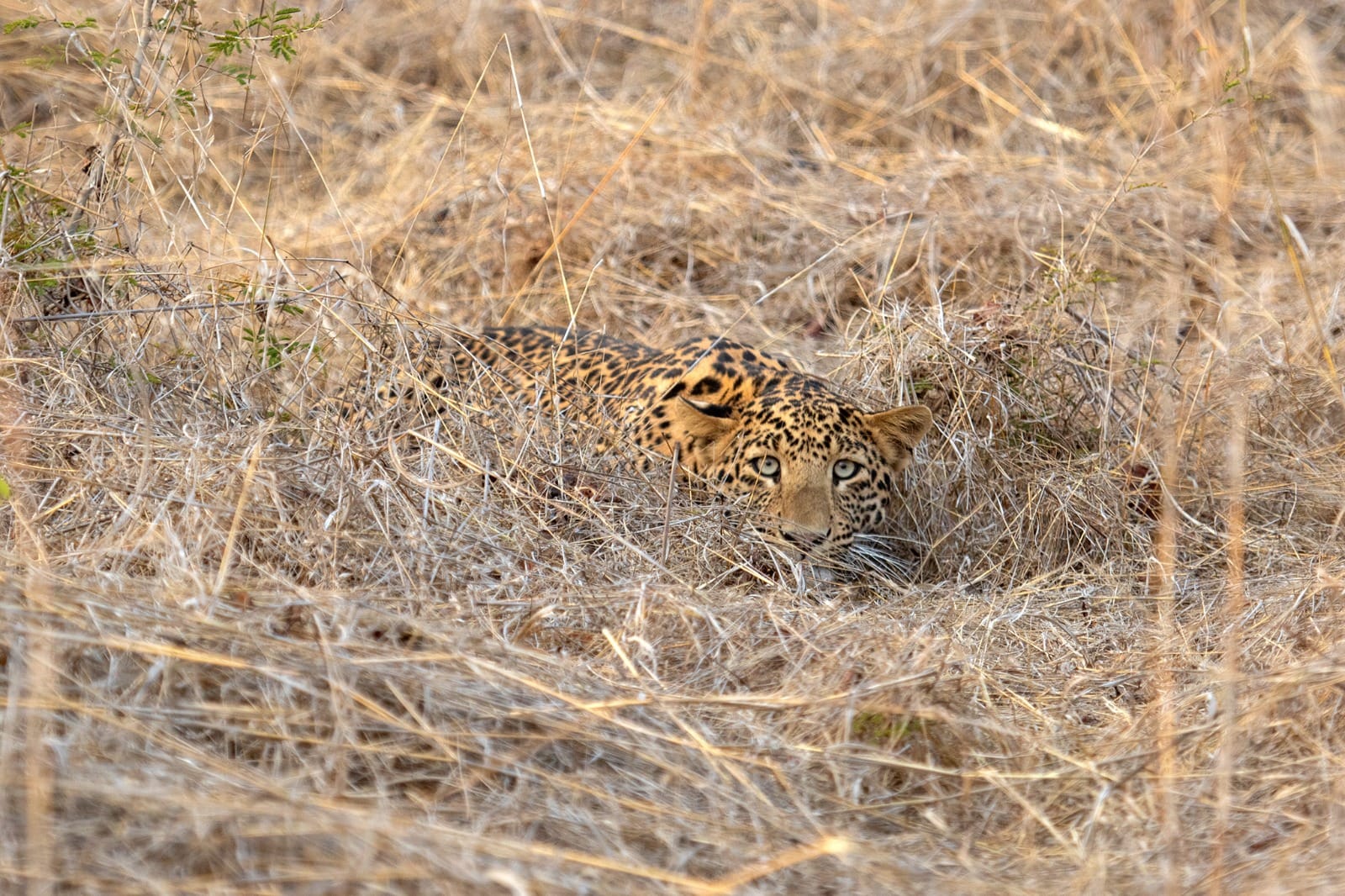
Up to a certain limit, the forest can cope with the rising numbers, after which the young and sub-adult leopards are forced to look for new places. (Photo: Dr. Dharmendra Khandal)
Question 4: Are our forests truly inadequate, or are we misunderstanding wildlife behaviour?
Apart from water and food, only tigers can naturally control leopard numbers. Since tigers are absent from Jaipur’s forests, this is another reason for the population explosion.
Where tigers disappear, the natural control over the leopard population vanishes.
The existing natural prey (Cheetal, Sambar, Nilgai, etc.) cannot sustain such large numbers.
If we try to increase natural prey, the already large leopard population will immediately eliminate it.
This means neither can natural food be increased, nor can the population be controlled naturally. Therefore, this population growth is not a sign of success; it is a crisis in the making.
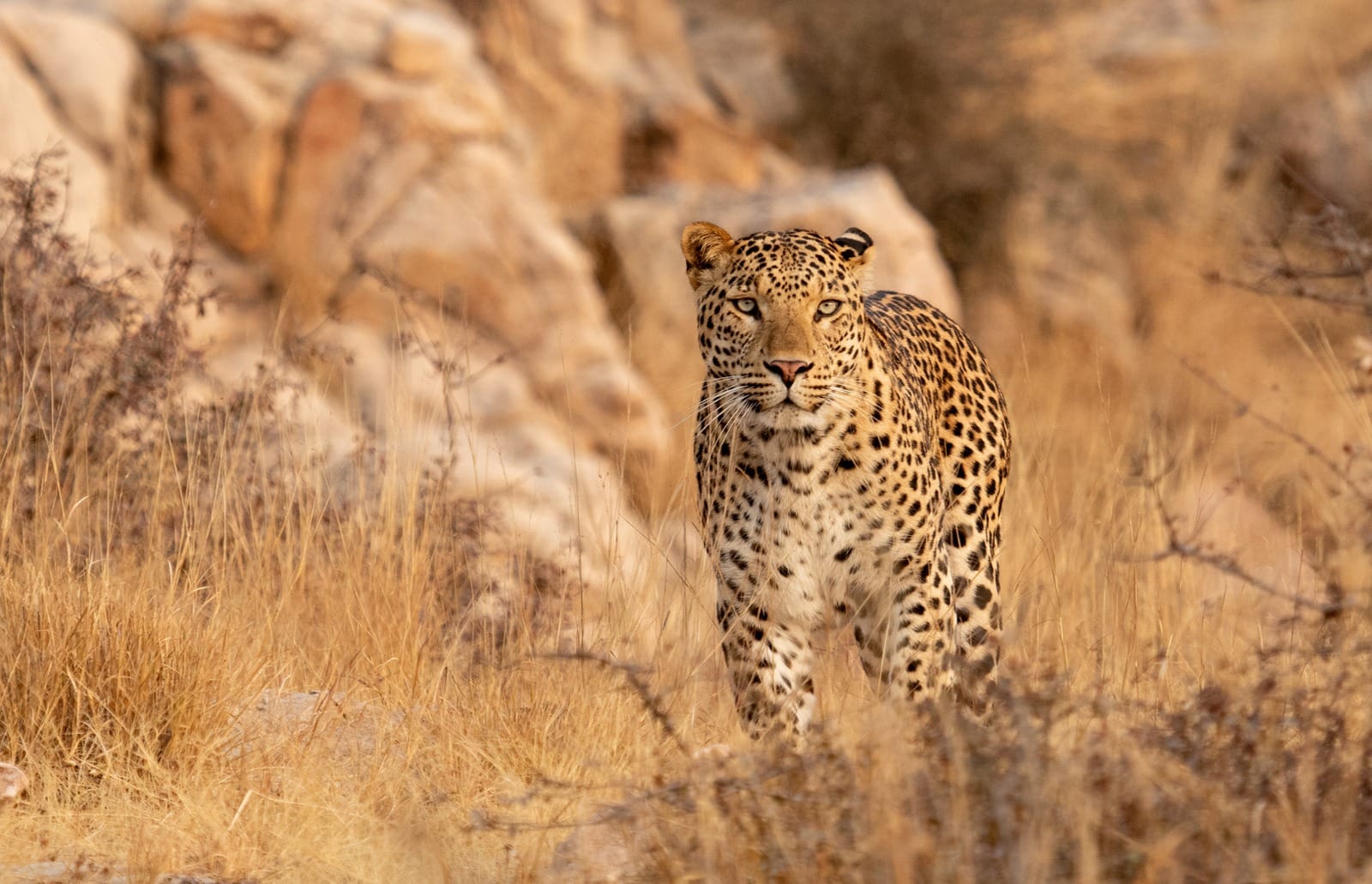
Leopards are often caught in Jaipur and released elsewhere, which gives rise to new problems (Photo: Dharmendra Khandal)
The Problem with Relocation
Often, leopards are captured in Jaipur and released into areas like:
Lohargal
Shakambari
Mansa Mata
However, these areas already have a low-density, natural leopard population. When a new, highly-competitive young male suddenly arrives:
It can harm the local leopards.
It can increase human-wildlife conflict in the new area.
In the name of a solution, a new problem is often created elsewhere.
The Real Solution
To manage this situation, it is essential that:
Garbage spread around cities and forests is completely controlled and cleaned up.
The availability of unnatural food is eliminated.
Forests are gradually returned to their natural state.
The population is not allowed to reach an explosive level.
Only then will the leopard population stabilize naturally, and conflict will decrease. There is no easy fix. We must learn to live with this reality.
Yearly translocation of leopards to others habitat
I agree with you, Dharmendra. Such site-specific population explosion of leopards (or even tigers) is unsustainable and a recipe for human-wildlife conflict (HWC). Conservation success when measured only on the basis of increase in numbers of large predators is counter-productive. Keeping HWC incidents bare minimum must be aimed for. Sterilisation of large cats, wherever needed, must be implemented. This the only way we can keep their increasing numbers under control. Coexistence has limitations and cannot be pushed when it results in the loss of human lives as is seen in Chandrapur, Pune, Nashik and Ahmednagar districts of Maharashtra.
Mumbai’s Sanjay Gandhi National Park has also crossed the threshold limit of sustaining leopard population.
Very soon conflict situation will increase in Jawai too.
Difficult times ahead…