This article examines human-wildlife conflict through the lens of history, ecology, and long-term field observations, challenging some of the most widely held assumptions about tigers, tourism, and coexistence.
Over the past few years, human-wildlife conflict has once again become a central theme in public discussions. It is often assumed that such conflicts have increased rapidly in recent times. However, this is a complex issue and is frequently interpreted through emotional responses to individual incidents rather than through careful analysis of long-term data and trends.
A historical perspective makes it clear that human-wildlife conflict has always been a part of our existence and is likely to remain so. The real challenge, therefore, is not to eliminate conflict entirely, but to maintain balance, understanding, and coexistence with wildlife.
The most serious and sensitive form of human wildlife conflict arises when a human fatality occurs. As soon as such a death takes place in any area, the social and political atmosphere becomes highly fraught with tension. Under pressure to provide immediate solutions, it often becomes easiest to blame a single factor, even without adequate evidence.
A similar situation was recently observed around several tiger reserves in southern India. Tourism became the most convenient scapegoat for incidents of human-wildlife conflict. Political leaders, management authorities, and some so-called experts declared tourism to be the primary cause without conducting any in-depth analysis. As a result, tourism activities were completely shut down in biodiversity-rich areas such as Nagarhole and Bandipur, where tourism has remained suspended for several months.
If we consider Ranthambhore to be a laboratory, the situation becomes far clearer. Nearly 25 years of work in this landscape shows that over the past fifty years, approximately 22 human fatalities have occurred due to encounters with tigers. Of these, only two incidents took place outside the forest, while all others occurred within forest boundaries. This pattern is particularly significant because Ranthambhore is the most visited tiger reserve in the country.
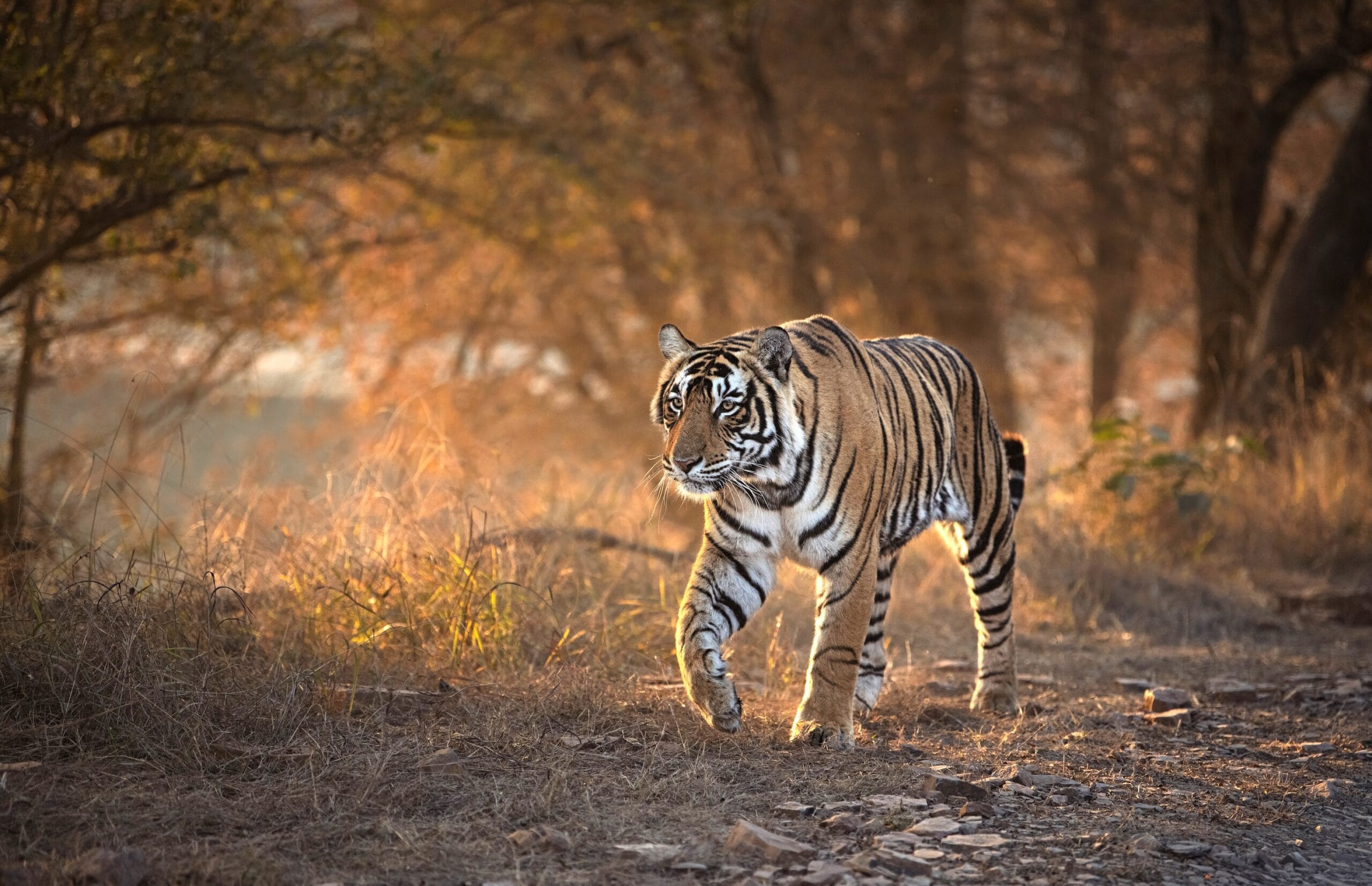
If tourism were truly a major factor driving tigers out of forests or making them aggressive, one would expect large-scale displacement of tigers from heavily visited landscapes. This has not been observed. In fact, in places like Ranthambhore, once again one of the most visited tiger reserves in the country, tigers continue to occupy core tourism zones over long periods of time.
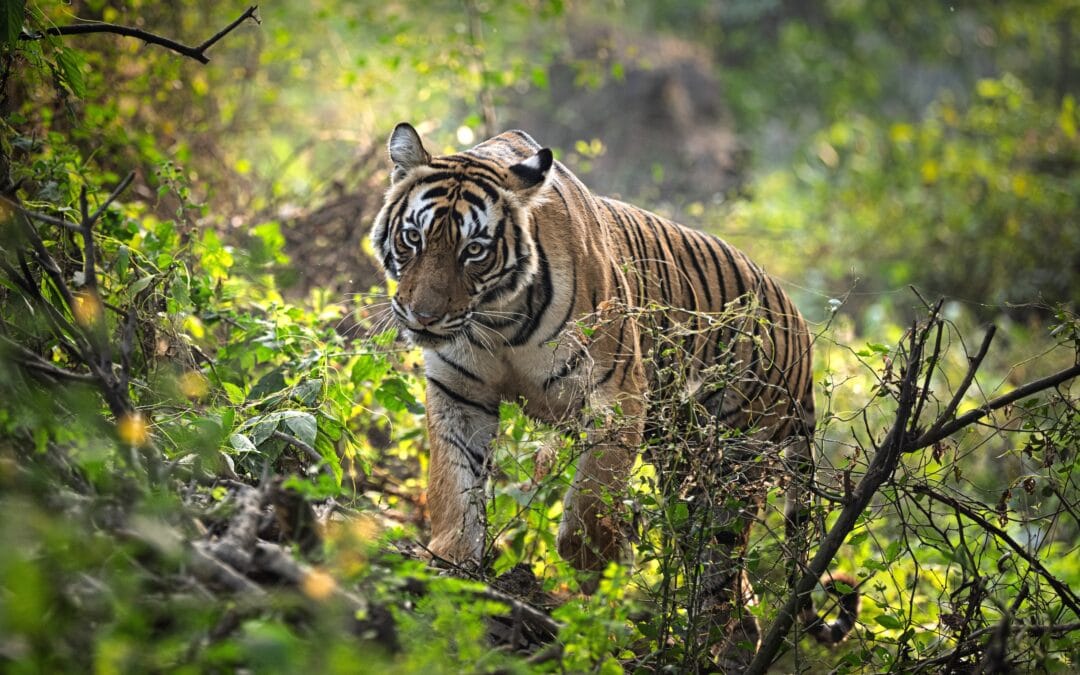
While tigers do occasionally move outside forest boundaries, systematic monitoring by trained field teams shows that most such cases involve sub-adult males dispersing in search of new territories. This is a well-documented natural biological process and is not a response to tourism pressure.
Despite this, media narratives frequently attribute every instance of a tiger appearing outside the forest to tourism, often without any ecological evidence to substantiate such conclusions. If tourism were indeed a dominant stressor, resident adult tigers inhabiting high-tourism areas would be the first to abandon these zones. The fact that this does not happen clearly indicates that tourism, by itself, is not the primary driver of tiger movement or conflict.
The lineage originating from Ranthambhore's famous tigress named 'Machli' is a vivid example. For nearly thirty years, multiple generations of tigers from this lineage remained in and around the Rajbagh area, which is widely regarded as the zone with the highest tourism pressure in the reserve. Despite this, neither Machli nor her descendants ever moved outside the forest. Her daughters and subsequent generations continued to inhabit core tourism areas such as Padam Talab, Malik Talab, and Rajbagh.
Similarly, along the Ganesh temple route of Ranthambhore, where around 150 vehicles travel daily toward the Trinetra Ganesh temple, along with approximately 70 tourist vehicles and regular forest department movement, a tigress named 'Sultana' successfully raised at least two litters of cubs. This directly challenges the argument that tourism alone creates intolerable pressure for tigers. It also highlights that tiger threat perception is influenced far more by biological factors such as competition from other tigers or leopards.
If tourism were a significant trigger for aggression, one would expect frequent attacks within core tourism zones, where human presence is continuous and intense. However, historical data from Ranthambhore clearly contradicts this assumption. Nearly 95% of tiger-related human fatalities over the past five decades occurred inside the forest, not in tourism areas, and typically involved people engaged in grazing, fuelwood collection, or other forest-based activities on foot. This distinction is critical. Tigers perceive humans on foot very differently from humans in vehicles, and aggression is far more likely in sudden, encounters at close-range than in predictable, regulated tourism settings.
Aggression in large carnivores is not a general behavioural response to human presence, but a context-specific reaction driven by biological and situational factors. Scientific observations and long-term field experience show that tiger aggression is most commonly associated with territorial disputes, mating competition, injury, old age, loss of hunting ability, or sudden provocation in close encounters, particularly inside forests where people habitually enter on foot.
It is essential to reflect seriously on these facts. While it may be an appealing idea to imagine landscapes completely free of human activity, this is not practical in a densely populated developing country like India. The question is not whether humans should be connected to forests, but how precisely they should be connected. If local communities do not receive economic and social benefits from forests, wildlife conservation efforts cannot be sustained in the long term.
Under present circumstances, there are very few alternatives more sustainable than eco-tourism. However, tourism must be continously improved by adopting low-noise vehicles, ensuring sensitive visitor behaviour, regulating visitor numbers, and strictly following the principles of minimal intervention. This not only benefits wildlife but also makes the visitor experience deeper, more educational, and more meaningful.
Viewed in a broader historical context, it becomes evident that human-wildlife conflict is neither new nor recent. The rock paintings of Bundi in Rajasthan and Bhimbetka in Madhya Pradesh clearly show that confrontations between humans and wildlife existed thousands of years ago. These paintings, estimated to be 10 to 15 thousand years old, depict humans forming groups, raising their hands, making noise, and driving away wild animals.
Historical records further support this perspective. In British India, more than 3,400 people were killed by wild animals in 1877 alone, with tigers being the cause of at least 819 confirmed deaths. Many additional deaths were attributed to unidentified wild animals, which were also likely to include tigers, as noted by R.G. Burton in 1933. Today, human deaths caused by tigers have declined to roughly 10 to 15% of those historical figures, clearly indicating a long-term reduction rather than an increase.
Comparisons with other species reveal even more striking data. In India, approximately five thousand people die annually due to incidents involving cattle, while human deaths caused by tigers remain limited to two to three hundred per year.
As mentioned earlier, historical data from Ranthambhore further shows that nearly 95% of tiger-related human deaths over the past fifty years occurred inside the forest.
Despite this, if we begin to view tigers themselves as the problem, such an approach is not only factually incorrect but also extremely dangerous. Tigers protect vast landscapes and entire ecosystems. When tiger conservation is viewed as a mission, the ecological services it provides benefit society as a whole.
Data show that more than 600 rivers originate from India’s 58 tiger reserves. These reserves together cover approximately 84 to 85 thousand square kilometres, just 2.6% of India’s total land area. Yet this small fraction safeguards nearly 30 to 40% of the country’s surface water flow and 15 to 20% of its forest carbon storage.
In other words, these forests contribute far more to India’s water security, climate stability, agriculture, and human well-being than their geographical extent would suggest. Their importance must therefore be understood not merely in terms of tourism or wildlife viewing, but as foundational pillars of national environmental security.
The argument that tigers are forced out of forests due to human pressure is exceptionally flawed, because the areas they enter outside the forest are neither safe nor free from human presence. Such claims are not only baseless but also dangerously misleading. What is needed is for more people to connect with forests through responsible tourism, particularly those who actively contribute to forest protection and wildlife conservation.
It is also important to acknowledge that opposition to tourism is sometimes driven by vested interests. Certain groups linked to mining and other extractive activities that are highly destructive of forests, actively promote the narrative that tourism is harmful, largely because tourism often raises voices against environmentally destructive practices. Like any activity, tourism too has a carrying capacity, and it must be regulated accordingly with great responsibility.
Ultimately, the question is not whether human-wildlife conflict exists, but how we choose to perceive it. Is the problem with the tigers, or with our decisions, our priorities, and the conclusions we rush to make?