

By Dharmendra Khandal, Ishan Dhar, Sachin Rai and Meenu Dhakad
The following analysis is not to discredit the achievements of the Forest Department nor create sensational news, even though there is a lot of interesting and important information for the protection of the tigers.
There were 18 tigers in 2006 forming a base population in Ranthambhore Tiger reserve. With improved monitoring, better protection and the involvement of local communities in the conservation process, tiger numbers grew from 18 to around 65 now in 2020.
Death is also an essential part of life and many of them died over a period of time under natural circumstances,recording all deaths is not possible. Ranthambhore is not a zoo but a massive reserve and the cats are very secretive animals. Since 2006 only 2 tigers (Machhali-T-16 and Big Daddy – T-2) have attained full age and the forest department recovered their carcasses. On the other hand this became possible because both the animals were getting supplementary food during their final stages.
The following analysis reveals many interesting facts about the 138 tigers which have come up in last 15 years from the dismal figure of 18.
Presently there are code numbers allocated to 116 tigers ranging from T 1 to T116. There are also 14 cubs , without code numbers as of now, which makes them 130. 2 adult tigers were without code numbers in the past anda total of 6 known cubs died during cubhood.
Records of Death:
- As per Tiger Watch’s analysis 26 tigers died in various circumstances.A total of 2 tigers died at the end of their lifespan and similarly a total of 11 tigers died in territorial fights. Please refer to Tables 4 and 5.
- 2 tigers died during the rescue or treatment operations. Please refer to Table 6.
- At least 5 tigers died due to poisoning . Please refer to Table 7.
- There are a few tigers which died in doubtful circumstances where the Forest Department might disagree with us. Please refer to Table 8.
Records of Missing Tigers:
- In the last 15 years at least 30 tigers have gone missing or are untraceable. Out of 30 tigers, 7 of them were old. Them going missing is obvious and they possibly died after reaching the end of their lifespans. The real worrying figure is the 23 out of the 30 which were young tigers. It is also a known fact that males travel long distances to search for new territories but what is alarming is that out of the 23 atleast 11 of them were females. Accounting for almost 50 % of the total missing.
- Missing young male tigers are not as much a cause of concern as missing young female tigers.
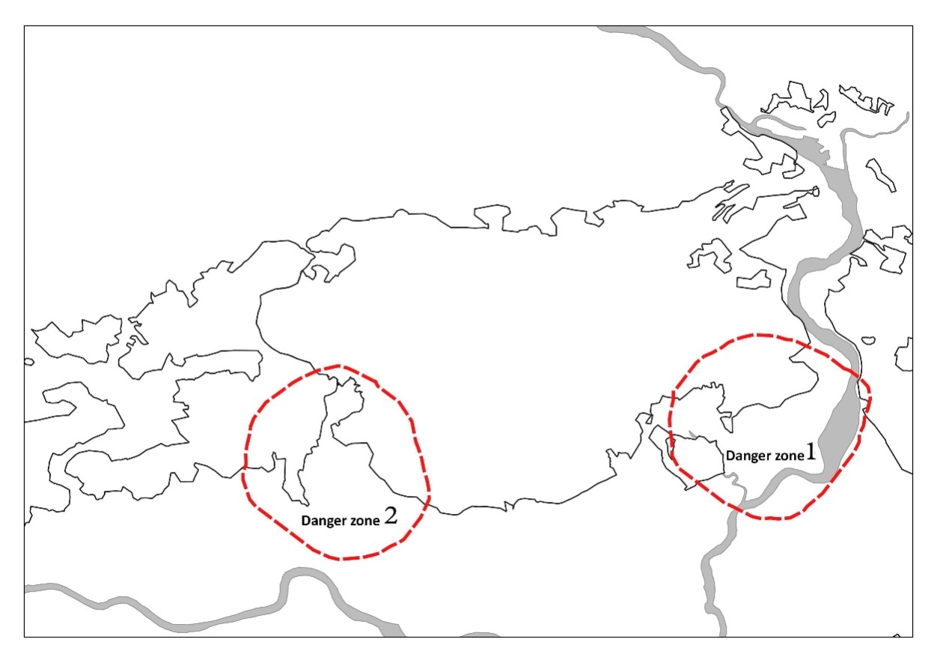
- On an average only 2 tigers went missing every year, which is not very high but the worrying part is this that most of them are going missing from 2 areas. We consider these areas as danger zones- 1 and 2. Table 4 shows that 60 % of tigers have gone missing from these two areas.
Present Situation
- At present we have 64 tigers in Ranthambhore Tiger reserve. A total 6 tigers out of the 64 are in Kailadevi Wildlife Sanctuary or in the adjoining district Dholpur.
- One of them mostly lives in the Indergarh- Bundi district.
- Thus only 57 tigers are in the main Ranthambhore Division. The figure also includes 15 cubs.
Discussion
- The base population was 18 in the year 2005 and it grew to 138 in 2020. This means that 8 tigers have been added to the base population every year.
- Out of a total of 138 tigers, at least 30 tigers are missing in 15 years, so the rate of missing tigers is 2 tigers per year.
- Out of a total of 138 tigers at least 26 tigers (including very young cubs) have died in 15 years, therefore the death of 1.7 tigers per year.
- A total 18 tigers have been sent to other areas or zoos due to becoming problem animals or they naturally migrated to other areas like Kuno etc. Therefore, 1.2 tigers per year have been deducted due to the aforementioned reasons.
- So, 2+ 1.7+ 1.2= 4.9 or around 5 tigers per year deducted from the population, but 3 tigers are added every year to the population.
MISSING TIGERS
TABLE 01: OLD TIGERS MISSING
| S.NO. | TIGERS | Year of Missing |
| 1. | T6 | 2016 |
| 2. | T9 | August 2018 |
| 3. | T14 | 2009 |
| 4. | T20 | 2018 |
| 5. | T22 | 2012 |
| 6. | T23 | 2019 |
| 7. | T26 | 2014 |
TABLE 02:YOUNG TIGERS MISSING
| S.NO. | TIGERS | Year of Missing |
| 1. | T17 | 2013 |
| 2. | T21 | 2010 |
| 3. | T27 | 2009 |
| 4. | T29 | 2010 |
| 5. | T31 | 2013 |
| 6. | T40 | 2010 |
| 7. | T43 | 2013 |
| 8.. | T49 | 2011 |
| 9. | T50 | 2011 |
| 10. | T53 | 2013 |
| 11. | T55 | 2013 |
| 12. | T67 | 2013 |
| 13. | T68 | 2014 |
| 14. | T70 | 2014 |
| 15. | T76 | 2015 |
| 16. | T77 | 2018 |
| 17. | T78 | 2018 |
| 18. | T81 | August 2017, Talawada |
| 19. | T82 | October, 2016, Kalakhora |
| 20. | T88 | 2017 |
| 21. | T89 | 19 Jan 2017 |
| 22. | T90 | 2016 |
| 23. | Daughter of T11 and sister of T92, code number not given | 2016 |
TABLE 03: MISSING TIGERS BY YEAR
| Year | No. Of missing Tigers | Tiger ID |
| 2009 | 1 | T27 |
| 2010 | 4 | T14,T21, T29, T40 |
| 2011 | 2 | T49, T50 |
| 2012 | 1 | T22 |
| 2013 | 6 | T17, T31, T43, T53, T55, T67 |
| 2014 | 2 | T26, T68 |
| 2015 | 2 | T70, T76 |
| 2016 | 4 | T6, T82, T90 , Daughter of T11 and sister of T92, code number not given |
| 2017 | 3 | T81, T88,T89 |
| 2018 | 4 | T9, T20, T77, T78 |
| 2019 | 1 | T23 |
TABLE 04: NATURAL DEATHS DUE TO AGE
| S.No. | Tiger ID | Date | Area |
| 1 | T2 | May 2011 | Kachida |
| 2 | T16 | Aug 2016 | Khem villas |
TABLE 05: NATURAL DEATHS DUES TO TERRIORIAL FIGHTS
| S.No. | Tiger ID | Date | Area |
| 1 | T4 | 2009 | Bherda |
| 2 | T25 | Jan 2020 | Chotasawta |
| 3 | T33 | Sept 2017 | Khandar |
| 4 | T36 | 2010 | Qualji |
| 5 | T85 | Jan 2019 | Khatola |
| 6 | T87 | Mar 2015 | Kundaal |
| 7 | T109 | Oct 2019 | Bodal area |
| 8 | 3 months old cub of t83 | 2018 | Ama ghati |
| 9 | 3 months old cub of t83 | 2018 | Ama Ghati |
| 10 | 1 month old cub of t84 | 2018 | Nalghati |
| 11 | 1 month old cub of t84 | 2018 | Nalghati |
Table 6: Deaths during Rescue Operations
| S.No. | Tiger ID | Date | Area |
| 1 | T5 | Feb 2011 | Kachida |
| 2 | T28 | 2018 | Chhan |
Table 7: DEATH DUE TO POISIONING
| S.No. | Tiger ID | Date | Area |
| 1 | T45 | Mar 2010 | Talda khet |
| 2 | T46 | Mar 2010 | Talda khet |
| 3 | Unknown Tigress | 2012 | Khandar fort |
| 4 | T79 Cub1 | Apr 2018 | Kandulinadi |
| 5 | T79 Cub2 | Apr 2018 | Kandulinadi |
TABLE 08: DOUBTFUL DEATH AS PER DR. DHARMENDRA KHANDAL
| S.No. | Tiger ID | Date | Area |
| 1 | T11 | Apr 2016 | Bhid |
| 2 | T15 | Sept 2008 | Guda |
| 3 | T35 | Mar 2016 | Sultanpur |
| 4 | T37 | Mar 2013 | Qualji |
| 5 | T30 | Jan 2016 | Khandar |
TABLE 9: POACHED BY MOGYA POACHERS AS PER FOREST DEPT.
| S.No. | Tiger ID | Date | Area |
| 1 | T32 | 2007 | Sakhawda |
TABLE 10: MOVED TO SARISKA
| S.No. | Tiger ID | Date |
| 1 | T1 | Jul 2008 |
| 2 | T7 | Mar2011 |
| 3 | T10 | Jun2008 |
| 4 | T12 | Jul 2010 |
| 5 | T18 | Feb 2009 |
| 6 | T44 | Jul 2010 |
| 7 | T51 | Jan 2013 |
| 8 | T52 | Jan 2013 |
| 9 | T75 | Apr2019 |
TABLE 11: SENT TO CAPTIVITY
| S.No. | Tiger ID | Date | Area |
| 1 | T24 | 2015 | Udaipur |
| 2 | T104 | 2019 | Ranthambhore |
TABLE 12: MOVED TO MUKUNDRA HILLS TIGER RESERVE, KOTA
| S.No. | Tiger ID | Date |
| T83 | Apr 2019 | |
| T91 | 2018 | |
| T98 | Feb 2018 | |
| T106 | Dec 2018 |
TABLE 13: NATURAL MIGRATION TO OTHER FORESTS
| S.No. | Tiger ID | Date | Area |
| T38 | 2010 | Kuno | |
| T56 | 2013 | Datiya | |
| T71 | 2013 | Madhya pradesh |
Tigers Missing from the Danger Zones
S.No. | Danger Zone 1 | Danger Zone 2 | Other Areas | Kailadevi Wildlife Sanctuary |
| 1 | T6 | T14 | T20 | T89 |
| 2 | T9 | T23 | T22 | |
| 3 | T27 | T31 | T26 | |
| 4 | T53 | T49 | T17 | |
| 5 | T55 | T50 | T29 | |
| 6 | T70 | T77 | T67 | |
| 7 | T76 | T78 | T68 | |
| 8 | T81 | T43 | T88 | |
| 9 | T82 | T90 | ||
| 10 | T11 CUB | T40 | ||
| 11 | T21 |
Very informative report, as expected from people who research well before publishing.
Interesting to note that most of the “missing” tigers are from areas that do not have any Tourism activities. Most ‘official’ reports and news items blame tourism activities for Tigers ranging out of the protected areas.
Danger Zone 1 which has 11 missing animals is not open to Tourists.
Danger Zone 2 which has 8 missing animals is mostly degraded forest area with very little Tourism and a major road cutting across it.
Other Areas, where there is most reproduction among Tigers, has 10 missing animals, some of which we know went missing after infighting injury like T-17.
Sachin and your colleagues. I follow T84 Arrowhead in particular,after seeing her in Dec ’17.
Your photography and extensive information through this initiative is to be commended.
I had heard Arrowhead had 2 cubs prior to her current daughters who are doing so well. I was saddened to read in your data that hey were killed in territorial fighting.
Please continue your important work. As a whole, it has immense value for the continued survival of India’s tigers.
I am sure you are very much admired for all you do.
Best wishes
Lee
Thank you for the valuable information Sir Dharmendra Khandal seeing the stats of the Ranthambore tigers and especially the fact that “The real worrying figure is the 23 out of the 30 which were young tigers”, why not we also think about upgradation and usage of Technology in monitoring the tigers now. We appreciate the efforts of forest department and because of their efforts the count have been rising (count can be seen in last 5years) but this count can have stronger picture if we bring technology in this sector. With advancement and implementation of IoT technology in Indian wildlife world, there is a fair chances of controlling the practices of poaching, poisoning, etc. I have submitted my resolution paper in WILD11 congress regarding this, if you will allow me can share with you too….looking forward to meet you in Pre-Congress.
Good news
Great analysis presented in a very matter of fact manner. Good job
Thank you for the in depth analysis. Very helpful for discussion of causes and possible solutions to address deaths and missing tigers. Also, useful for assigning Tiger Watch conservation resources.
Lovely job, very informative and well documented. I wish we could involve more local people I. Tiger watch and voluntary work. Visited Ranthambore on numerous occasions lovely the park. Please keep up th good work. Cheers All best wishes..
Fateh T42 is missing too
This is great stuff, data driven analysis and decision making is so important, i am glad you guys are taking the lead on this. Thank you for sharing and enriching us all
He is died
Very informative data great work tiger watch team